

Bioenergy Modernisation Programme
Bioenergy remains central to Africa’s energy landscape, accounting for nearly 50% of total primary energy supply and serving as the dominant source of household cooking fuel. Traditional biomass use, however, is linked to deforestation, health risks, and gender inequality. Recognizing these challenges, the African Union Commission (AUC) and UNECA developed the 2013 Africa Bioenergy Policy Framework and Guidelines, which emphasized sustainability, food security, land rights, and regional harmonization.
Since then, Africa’s policy architecture has expanded to include the African Energy Efficiency Strategy (AfEES), the Energy Transition Strategy (ETSAP), the African Green Hydrogen Strategy, and the Continental Energy Security Policy Framework. Within this evolving landscape, bioenergy is no longer viewed solely as household fuel but as a strategic pillar for clean cooking, industrial competitiveness, waste-to-energy, advanced biofuels, and sustainable carbon markets. The Bioenergy Modernisation Programme positions bioenergy as both an energy-access solution and a driver of Africa’s green industrialization.
Flagship Projects on Bioenergy
The Africa Bioenergy Policy Framework and Guidelines developed in 2013 provides Member States and RECs with guidance for environmentally responsible and socially inclusive bioenergy policies. It emphasized integration with national development goals, protection of food security and land rights, sustainability criteria, regional harmonization, and institutional strengthening.
The Continental Strategy for Sustainable Aviation Fuels (SAF), Low Carbon Aviation Fuels (LCAF) and Aviation Cleaner Energies, which was adopted in 2025 addresses Africa’s aviation sector by promoting sustainable fuels and cleaner energy pathways. It supports SAF and LCAF development, advancing decarbonization of air transport while safeguarding competitiveness. It aligns with global aviation climate goals and provides Member States with frameworks to integrate sustainable aviation fuels into national energy and transport policies.
The African Green Hydrogen Strategy and Action Plan adopted in 2025, positions Africa as a global leader in green hydrogen production and trade. It outlines pathways for scaling hydrogen technologies, mobilizing investment, and integrating hydrogen into industrial decarbonization. The plan emphasizes regional cooperation, infrastructure development, and alignment with Agenda 2063, ensuring hydrogen contributes to Africa’s energy security, competitiveness, and climate commitments.
About the Bioenergy Modernisation Programme
The Bioenergy Modernisation Programme is coordinated by the African Energy Commission (AFREC) under the African Union. Its objectives are to:
- Strengthen institutions and capacity for policy design and implementation.
- Mobilize finance for sustainable bioenergy investments.
- Promote regional harmonization of bioenergy policies across RECs.
- Support innovation and technology transfer for modern bioenergy solutions.
- Develop sustainability criteria and certification systems to ensure environmental and social safeguards.
By modernizing bioenergy, Africa can reduce reliance on traditional biomass, improve public health, empower women, create jobs, and contribute to global climate goals. The programme is a cornerstone of Africa’s Agenda 2063 vision and demonstrates Africa’s leadership in sustainable energy transitions.
Key Activities & Initiatives
News & Events

24 - 26 April 2023, Lomé, Togo: The African Energy Commission (AFREC) jointly with the United Nations Statistic Division (UNSD) conducted a three-day workshop to discuss the Strategic Framework for

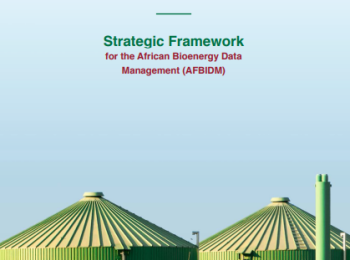
The purpose of this briefing note is to share a Policy Brief titled: Will Biomass Always Fuel Africa? and aStrategic Framework for Bioenergy Data Management (AFBIDM) in Africa published by

24 June 2021, Algiers, Algeria: The African Energy Commission (AFREC) concluded its workshop deliberations on bioenergy monitoring and reporting in Africa calling for accurate, effective and reliable data required for