


AFREC and Nigeria Strengthen Capacity to Improve Energy Statistics
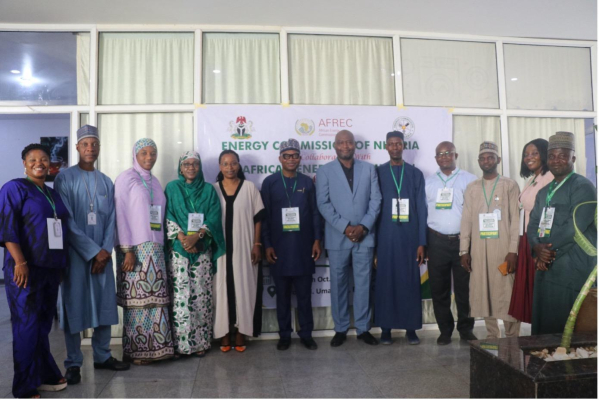
The African Energy Commission (AFREC) and the Energy Commission of Nigeria (ECN) have strengthened Nigeria’s capacity to compile, validate, and report reliable energy statistics through a three-day national training workshop on energy balance reporting in Abuja. The workshop builds on an online technical session conducted in Nigeria in September this year, focused on completing and interpreting the AFREC Energy Statistics Questionnaire.
Held from 28 to 30 October, the workshop equipped 23 participants, including eight women, from four ECN departments with the technical skills to improve the quality, consistency, and completeness of Nigeria’s energy data using AFREC’s Energy Balance Questionnaire. The training forms part of wider efforts to harmonise energy statistics across African Union Member States and strengthen evidence-based energy planning.
“Strengthening the capacity of Member States to produce timely, accurate and comparable energy statistics remains central to AFREC’s mandate,” said Mr Abdoulaye Oueddo, the Acting Head of AFREC’s Energy Information System and Statistics Division. “Reliable data are essential for evidence-based policymaking and effective energy planning. Through this training, AFREC is working with Nigeria to improve data quality assurance and strengthen national coordination mechanisms for energy statistics.”
Participants received technical training on energy balance flows, energy product classifications, units of measurement and quality assurance procedures. Practical exercises focused on compiling, reconciling and validating energy data, identifying gaps and improving the accuracy of Nigeria’s energy balance before submission to AFREC.
Dr. Olugbemi Toyin, Director of the Energy Information System at ECN, said reliable energy statistics are fundamental to national energy planning, policy formulation and decision-making. “This training provides an important opportunity to strengthen our technical capacity to compile, validate and report Nigeria’s energy balance data in a systematic and consistent manner,” he said. “By enhancing collaboration across the Energy Commission’s departments and strengthening our engagement with AFREC, we aim to improve the quality and completeness of our national energy statistics and ensure that they effectively support Nigeria’s energy development priorities.”
The training also supports the African Energy Information System (AEIS), AFREC’s continental platform for collecting, processing, analysing and disseminating energy data from the 55 African Union Member States. Through the AEIS, AFREC works to harmonise energy statistics and improve the availability of comparable data for national, regional and continental energy planning.
The collaboration reinforces AFREC and ECN’s commitment to strengthening national statistical capacity and promoting data-driven energy governance. Improved energy statistics are essential to Nigeria’s energy planning and policy analysis, regional cooperation and progress towards Sustainable Development Goal 7 on affordable, reliable, sustainable and modern energy for all.
Notes to Editors
African Energy Information System (AEIS) is a continental platform for energy data collection, validation, management and dissemination. The system supports National Focal Points in AU Member States in coordinating national energy data collection and validation. The AEIS covers key areas including energy statistics and energy balances, energy efficiency in the residential sector, power plant capacity, and energy prices and taxes. An energy balance provides a comprehensive account of a country’s energy production, imports, exports, transformation, losses and final consumption. The data help policymakers assess energy supply and demand, monitor energy security and make informed decisions on energy infrastructure, investment and policy priorities.
The African Energy Commission (AFREC) is a specialised energy agency of the African Union mandated to coordinate, harmonise and promote the development of Africa’s energy sector. AFREC works with AU Member States and Regional Economic Communities to support energy policy development, strengthen energy data and information systems, promote the rational exploitation and development of energy resources, and advance regional and continental energy cooperation.
